

The Merseyside Derby is one of the oldest fixtures in the football calendar and is always one of the most exciting.
Geographically separated by less than a mile, the fixture became famously known as the “Friendly Derby”.
Unlike many traditional rivalries, allegiance was rarely dictated by class, religion, or geography.
Families across the city were routinely divided down the middle, with red and blue supporters sitting side by side on the terraces and travelling to matches together.
Whether the game is played at Anfield or Goodison (now Hill Dickinson Stadium, of course) the match has always been one of the very best and one which tends to attract the TV cameras from Sky Sport, BT Sport, TNT etc.
“There are some events along life’s waysides that never pale. And an Everton-Liverpool meeting is one of them. Today all roads lead to Goodison: the stage is set for yet another mighty, pulsating struggle for supremacy.”
– Everton v Liverpool match programme, October 1932.
The inaugural derby came in the final of the Liverpool Senior Cup on April 22nd, 1893 – a game Liverpool won 1-0 in front of 10,000 spectators at Bootle Cricket Club.
However, the first-ever League match came on October 13th, 1894, when a then-record English crowd of 44,000 saw Everton win 3-0 at Goodison Park.
The history of the derby is packed with incident.
In 1933, Liverpool put their highest number of goals past Everton to win the Anfield match 7-4.
Two years later they won 6-0, recording their biggest-ever margin against their neighbours.
In 1982, Ian Rush hit four goals at Goodison as a rampant Reds went on to win 5-0. The Kop still sing about it at the end of Poor Scouser Tommy.
Nine years later, Liverpool took the lead four times in an FA Cup fifth round replay – only for the home side to continually strike back and level the game 4-4.
The derby’s unpredictability is also legendary, with results always too difficult to call as form goes completely out of the window when those 22 players take to the field.
In 1978, Everton ended a run of 14 winless games by taking the points off unbeaten Liverpool, and in 1988, Liverpool were on the verge of beating Leeds United’s magnificent record of 29 games unbeaten from the start of a season before going down to a single Everton goal at Anfield.
Dramas like those that make every derby match an automatic sell-out, wherever it’s played.
The record crowd for a League match between the two came in September 1948 when more than 78,000 packed into Goodison Park.
In 1984, a capacity 100,000 crowd were at Wembley for the Milk Cup Final – a game that ended goalless, but Liverpool went on to win the replay 1-0 at Maine Road three days later.
In 1967, when Everton hosted a fifth round FA Cup tie between the two clubs, the match was beamed back to giant screens at Anfield via closed-circuit TV. A crowd of 64,851 were at Goodison to see the action live, while another 40,109 packed into the terraces across Stanley Park.
As the Premier League era dawned, the nature of the derby shifted on the pitch.
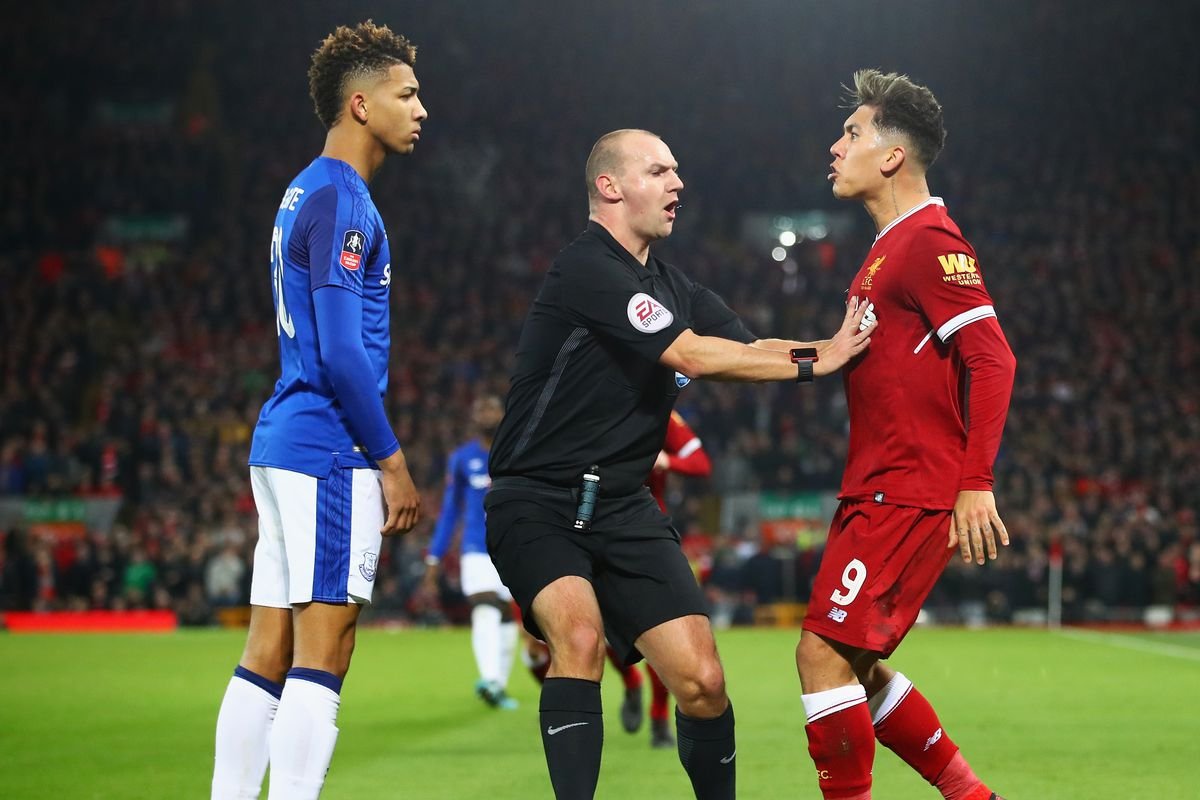
While family bonds remained intact in the stands, the matches grew notoriously fiery, resulting in more red cards than any other fixture in Premier League history.
Liverpool eventually established the greater share of success, accumulating European and domestic trophies, while Everton fought tenaciously to disrupt their neighbours.
As the longest uninterrupted top-flight derby in English football, contested continuously since 1962, the Merseyside derby represents an enduring monument to local passion and football history.
